
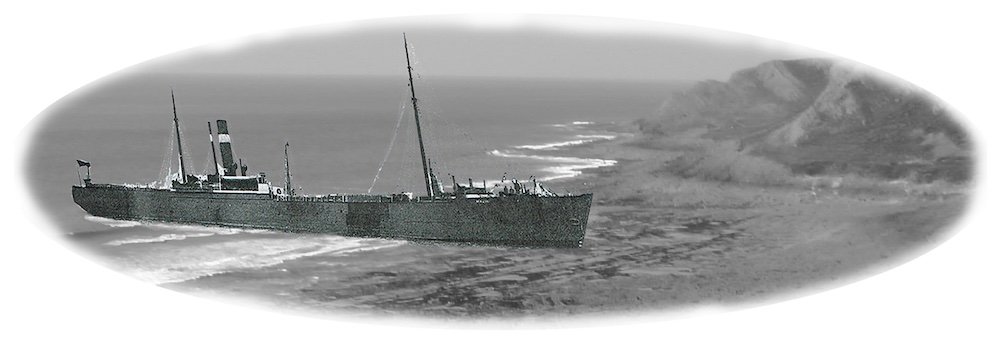
At 5:31pm on a cold January day in 1888, the 1,049 ton schooner-rigged steamship the Milan, bound for Bristol from Alexandria with a cargo of 500 tons of cottonseed, ran aground on the rocks of Slade’s Foot, Overton, in thick fog.
The official inquiry found that the captain, Frederick Lowery, was to blame for mistaking the northern point of Lundy Island for Hartland Point. They decided that his error of navigation did not justify finding him in default. They might have acted differently had they been privy to the report sealed tight by the Foreign Office to prevent an international incident.
The following narrative draws on that report, released almost a hundred and thirty years later, and long after the fall of the Ottoman Empire and the passing of the Earl of Cromer, Evelyn Baring. The two main players in the calamity.
5:15pm, January 13, 1888
Youssef Elmasry looked up from securing the hatch cover protecting the delicate cargo of cottonseed and tapped the arm of the man tying off the ropes. He started to speak, but the man raised his hand quickly and squinted angrily at him. “English.” The man looked around urgently. “Again I must tell you? These people cannot know who we are.” Youssef stood up straight and puffed out his chest. “I am proud, I am Egyptian. We gave these infidels all that they h—” “Shut up!” The man pulled him back down. Youssef returned the hard look. “Are you so ashamed of our homeland, Omar?” “No, of course I am not.” Omar looked around again. “But what would you have me do? Roll out my prayer mat and pray to the Prophet? Sallal-lahu Alayhi Wa Sallam.” He closed his eyes for a moment then gripped Youssef ’s sleeve. “We are almost there. This is the waterway that leads to their southern port of Bristol. Soon we will be done and we shall return home.” Youssef grinned. “We will be heroes and Mustafa will welcome us into his home with arms open wide.” “Silence,” Omar said, and sighed heavily. “You talk of this here, on the ship of the infidel?” “I have no fear of these men.” Youssef sniffed. “When I raise my jambiya dripping with the blood of their man Baring, their Consul. Our land is ours until Allah says otherwise.”
Omar slapped his face and leaned very close to him. “You are a fool. Your loose tongue will see us both hanging from a rope.” He spoke very slowly and his spittle spattered onto Youssef ’s face. “You speak of this again and I will put you over the side.” He leaned away a little so the man could see the fog-shrouded cliffs silhouetted against the fading sky. “And you do not swim, do you?” Youssef pulled away and stood. “I will remain silent. Until the act is done and our homeland is free from British oppression.” He brushed at his woollen shirt. “Then I shall proclaim our great deed from the highest minaret.” Omar stood up next to him. “Do that. But until then remain silent.” He started to turn away then looked back. “I will not remind you.” He strode away across the deck and Youssef followed, angry but silent.
William Powell, dressed in oversized work clothes, stepped out of the locker a few feet from the hatch and watched the men walk away. What he’d heard replayed in his mind as he tried to make sense of it. He had shared his time on board with these men since they left Alexandria and had spoken not a word to them in that time. He didn’t like them and now he knew why. He didn’t fully understand what he’d heard, but they’d spoken of murder and a British Consul. He headed for the bridge to tell the captain.
Omar saw the boy leave the locker, look at them and run. He started after him, but gave up. He could not catch him. The boy would inform the captain and they would be undone. The days of hanging at sea were past, but he was under no illusion that this would be their fate when they reached Bristol. He had to do something to save himself. And his mission.
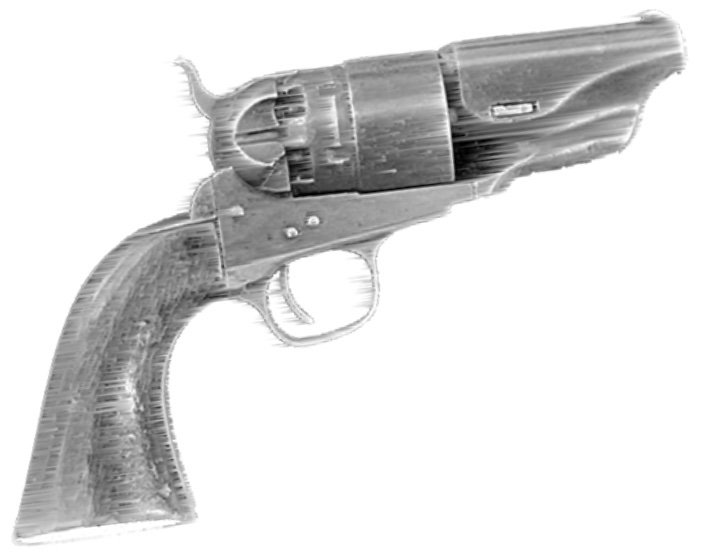
Captain Lowery was in his cabin and it took William a long minute to run down from the bridge and knock on his door. Frederick Lowery had known the boy for most of his young life and had no doubt that what he was being told was complete, accurate and true. Without speaking, he opened the small safe and took out a pistol, checked that it was loaded and opened the door. “Wait here, William.” He closed the door behind him and started up the stairs to the bridge.
“Are you sure this will work?” Youssef said, his voice betraying his unease. Omar’s white knuckles showed as he gripped the ship’s wheel. “Yes, it will work.” He nodded towards the cliffs rising eerily through thick fog. Youssef raised his dagger and pointed it at the two men backed up against the bulkhead. He glanced quickly out the window and licked his lips. “We will remain on the ship?” “No.” Omar pulled the wheel sharply to port. “We will be waiting on the shore for any who survive.” Youssef relaxed for a moment then tensed. “These men will take the wheel when we leave. Should I…?” He waved the point of his jambiya. “No. No. It must look like an accident,” Omar said, and looked quickly over his shoulder. “Give me the knife. You go quickly and lower the dinghy and wait for me.”
The bridge door thudded heavily as the captain shouldered it, then again. The lock held, but it would not for long. Omar squinted ahead, and for a fleeting moment the fog parted and he could see the cliffs. Much closer than he’d thought. He ran out onto the bridge wing and swung over the rail. He looked back to see the helmsman dash to the wheel and the first mate pull the telegraph into reverse. The door burst in and the captain staggered onto the bridge and took a stunned look at the approaching cliffs, grabbed the wheel and pulled it round to starboard with desperate urgency. The ship resisted for a moment; then her bow moved and she was running at a sharp angle to the rock face.
Both her engines were at full speed astern when she hit. That the captain had managed to put her up onto the slanting outcrop of Slade’s Foot saved her and the twenty one souls on board. But even though she hadn’t run into the cliffs, her crew was in mortal danger from the sea pounding her sides and dragging her across jagged rocks threatening to tear out her keel.
The captain signalled all stop on the engine room telegraph then ordered the men up on deck. He ran to the bridge wing and shouted to the men to launch the two lifeboats and to ready the jollyboat at the stern. The wreckers had taken the dinghy and disappeared into the fog, but the remaining boats would be sufficient to save the crew. And at that moment, the safety of his men was the only thing on his mind. The ship could be replaced, but a life lost is gone forever.
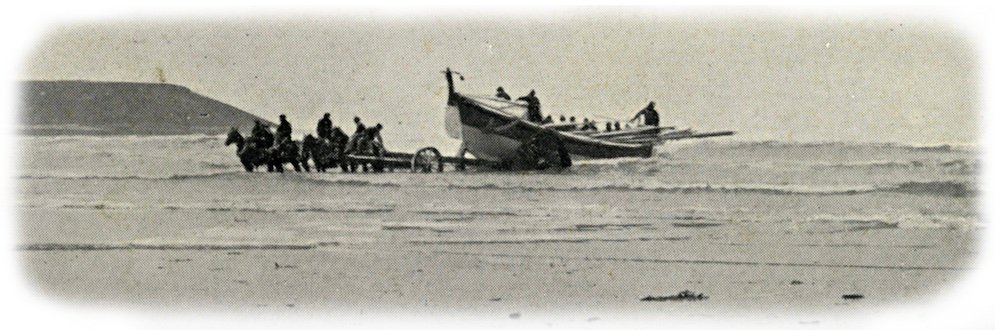
They waited half an hour in the hope that the sea would settle and the fog lift. A gut-wrenching eternity while the sea threw everything it could at the captured ship. At last the lifeboats swung out and the men made ready to get away. A shout from astern brought the captain to the bridge wing again and he saw a lifeboat coming alongside in the boiling surf. He closed his eyes and gave a silent thanks. The lifeboat could not take all his crew in one trip, so he and his officers would have to risk launching the boats into the wild water. The lifeboat was manned by a crew who knew these waters intimately, but were still fighting the huge waves breaking against the ship’s side. He didn’t know this coast, nor did any of the men who would soon put their lives in God’s hands and lower themselves into the unknown sea. He would loose some, perhaps all of them. The thought chilled his soul. He must wait for the weather to abate or for the lifeboat to return.
The fog was getting worse, blocking out the land just yards away. If they waited, the waves crashing against the stranded ship could break its back and spill them onto the rocks. He looked at the men watching him and awaiting his orders. Stay and risk being torn to pieces or launch a boat and gamble that they could remain in control. Both options terrified him, but he was the captain, and it was his decision. “We wait for the lifeboat to return,” he said to the men on the bridge. The men exchanged long looks, but none wanted to brave the waves. They would wait, but watch for any sign that the ship was foundering, knowing that any sign would already be too late.
Their resolution was starting to weaken as time dragged on and the ship groaned and cracked on its rocky perch. The captain ordered them to the boats so they should at least stand ready if a launch was necessary. Almost as soon as the men came out on deck, a rocket hissed over the rigging, bringing a line to the ship. The crew fastened the line to the mainmast and pulled the heavier ropes aboard. Then one by one they were hauled to the shore in the attached breeches buoy.
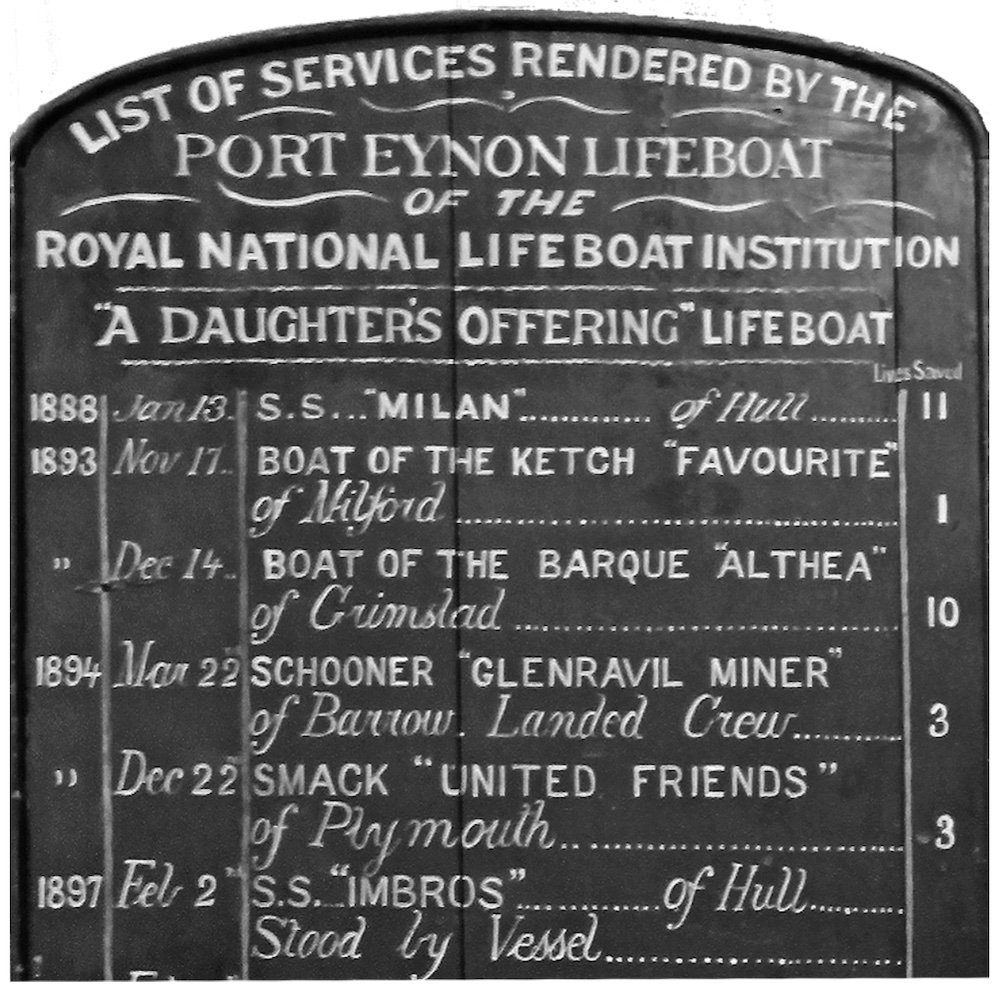
Captain Lowery was the last to make the short trip over the rocks and stepped down onto the grassy path with an almost intoxicating sense of relief. He crossed to the men at the buoy and held out his hand. “You saved us from a terrible choice, gentlemen.” He shook offered hands. “You and the courageous lifeboat crew have done a fine day’s work.” “The lifeboat is from Port Eynon. We’re the rocket crew from Rhossili.” The speaker grinned. “We’d show them how to use the buoy, but it’d be a waste of time. Not too bright, boys from this side of the hill.” The captain slapped the man on the shoulder then joined his crew at the edge of the cliff overlooking his ship. “We’ll be back on board tomorrow and see if we can refloat her.” The first mate nodded without turning. “Only if we lighten her, and then it will be far from a certainty.”
The captain touched the first mate’s arm and they moved away from the others. “Take young William to the nearest town and get a message to the authorities. The wreckers have other ambitions, I fear. The boy knows their plans.” He looked around. “Did you see him?” “I did. He was one of the first into the lifeboat. I saw to it.” The first mate started to move away. “I’ll find him.” “Swansea is the nearest town of note,” the huge man said. “The boy will be in Port Eynon over the point. You’ll find horses there.” He sniffed. “Not as good as you’d get in Rhossili, but they’ll serve you well enough for a short journey.”
Captain Lowery walked around his ship at low tide that night and found her holed on both sides. She wouldn’t be refloated in the morning. The salvage operation was going to take time. It took seventeen days to offload almost three hundred tons of cargo and make temporary repairs to the holes, and on the morning of 30 January, explosives were used to blow out jutting rocks that would tear her open, and tugs towed her off Slade’s Foot to limp to Mumbles flat for more repairs before finally being towed on to Bristol. She was broken but not lost. No trace of the wreckers or their stolen dinghy was ever found, and Evelyn Baring returned to Egypt to oversee its rise in prosperity and eventual independence.
Despite saving his crew, Captain Lowery’s career was over. Years later he revisited the rocky shore and saw the thirty-yard furrow ploughed into the rock by the Milan’s keel. An echo that remains to this day. As he stood on the cliff in the sunshine and looked out across the calm blue sea, he knew why he felt no bitterness or sense of injustice. They all should have died that day, but God had been looking their way.
Author: Leigh Barker